
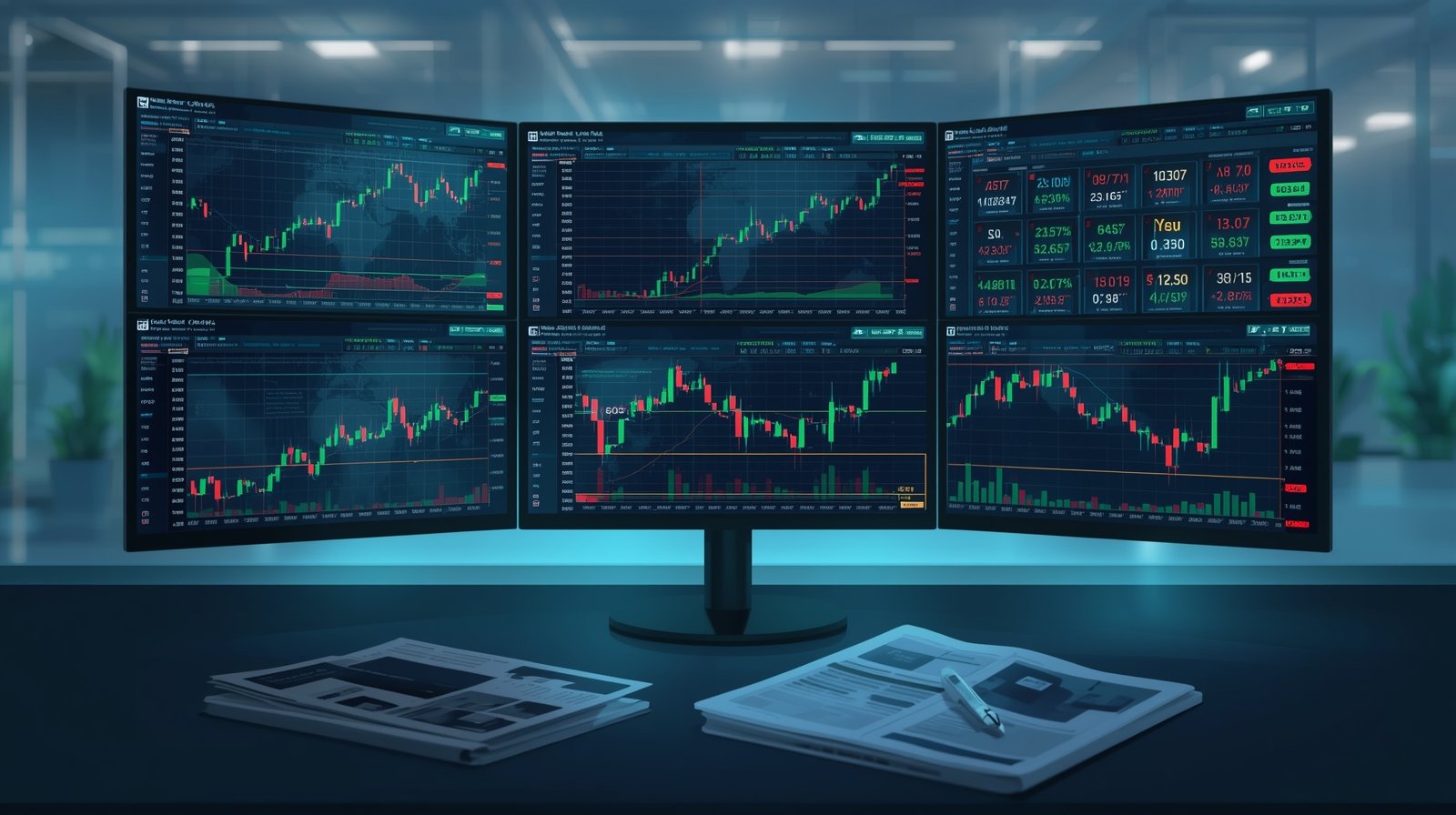
Artificial intelligence has moved from science fiction into the core of modern finance. Automated systems now execute millions of trades daily, manage portfolios worth billions, and make split-second decisions that influence global markets. This technological shift raises important questions about fairness, accountability, and the future of financial markets. As AI-driven trading becomes more accessible to retail investors, the ethical implications demand careful examination.
AI-driven investing raises concerns about market fairness, algorithmic accountability, and access inequality. While automation removes emotional bias and democratizes sophisticated tools, it also creates new challenges around transparency, regulatory oversight, and the concentration of technological power in financial markets.
The Promise of Democratized Trading Technology
For decades, institutional investors maintained significant advantages over individual traders. Large financial firms employed teams of analysts, used expensive data feeds, and deployed sophisticated algorithms unavailable to retail investors. This created an uneven playing field where individual traders competed against well-funded organizations with superior resources.
AI-driven trading platforms have begun shifting this dynamic. Systems like those developed for korvato trading aim to provide retail investors with institutional-grade tools. These platforms analyze market data continuously, identify potential opportunities, and execute trades faster than human traders can process information. The technology operates without the emotional biases that often lead to poor investment decisions.
This democratization represents a significant ethical argument in favor of AI trading systems. When sophisticated tools become accessible to everyday investors, the market becomes more equitable. Individuals gain access to risk management capabilities, real-time analysis, and execution speed previously reserved for large institutions. This levels the competitive landscape and potentially creates fairer market conditions.
However, democratization alone does not resolve all ethical concerns. Access to powerful tools does not guarantee equal outcomes, and new technologies often create unforeseen challenges that require examination.
Accountability and the Black Box Problem
One of the most pressing ethical issues surrounding AI-driven investing involves accountability. When algorithms make trading decisions, determining responsibility for losses or market disruptions becomes complicated. Traditional investing placed clear accountability on human decision-makers. Automated systems blur these lines.
Many AI trading systems function as “black boxes” where even their developers cannot fully explain every decision the algorithm makes. Machine learning models trained on vast datasets may identify patterns and execute trades based on correlations that humans cannot easily interpret. This opacity creates several problems:
- Investors may not understand why specific trades were executed
- Regulators struggle to audit algorithmic decision-making processes
- Determining fault when systems malfunction becomes legally complex
- Hidden biases in training data may produce unfair outcomes
The question of automation accountability extends beyond individual losses. When multiple AI systems interact in markets, they can amplify volatility or create feedback loops that destabilize prices. The 2010 Flash Crash, where the Dow Jones Industrial Average dropped nearly 1,000 points in minutes before recovering, demonstrated how algorithmic trading can produce extreme market events.
Establishing clear accountability frameworks remains an ongoing challenge. Should developers be responsible for algorithm behavior? Should the companies deploying these systems bear liability? Or does responsibility ultimately rest with users who choose to employ automated trading? These questions lack simple answers and represent significant ethical considerations in fintech ethics discussions.
Transparency Versus Competitive Advantage
Financial transparency serves as a cornerstone of ethical markets. Investors deserve to understand the risks they face and the systems they use. However, AI trading systems create tension between transparency and competitive advantage.
Companies developing trading algorithms invest substantial resources in research and development. Their competitive edge depends on proprietary methods that outperform competitors. Requiring complete transparency about how these systems work could eliminate the incentive to innovate. Competitors could simply copy successful approaches, reducing the rewards for original research.
Yet without adequate transparency, investors cannot make fully informed decisions. They may not understand the risks inherent in algorithmic strategies or how their capital is being deployed. This information asymmetry raises ethical concerns about informed consent and investor protection.
Striking the right balance requires careful consideration. Some level of financial transparency is ethically necessary to protect investors, but excessive disclosure requirements could stifle innovation. Regulatory frameworks must navigate this tension while ensuring markets remain fair and investors stay protected.
Different jurisdictions approach this challenge differently. European regulations tend to emphasize consumer protection and transparency, while other markets prioritize innovation and competition. The global nature of financial markets means these varying approaches interact in complex ways, creating additional challenges for ethical oversight.
Market Stability and Systemic Risk
The widespread adoption of AI-driven trading systems introduces questions about market stability. When many algorithms respond to the same market signals simultaneously, they can create herding behavior that amplifies price movements. This coordination, even if unintentional, may increase volatility and create systemic risks.
Consider a scenario where multiple AI systems are programmed to sell assets when certain risk thresholds are exceeded. A sudden market decline could trigger simultaneous selling across numerous algorithms, accelerating the downturn. Human traders might recognize this as an overreaction and see buying opportunities, but automated systems may lack this nuanced judgment.
The concentration of algorithmic trading in specific market segments raises additional concerns. High-frequency trading firms using AI systems now account for significant portions of trading volume in many markets. This concentration means technical failures or algorithmic errors at a few firms could have outsized impacts on market functioning.
Regulators face the challenge of monitoring these systemic risks without complete visibility into proprietary trading systems. Establishing safeguards that prevent cascading failures while allowing beneficial innovation requires sophisticated oversight capabilities that many regulatory bodies are still developing.
From an ethical standpoint, companies deploying AI trading systems bear some responsibility for considering their broader market impact. Individual profit maximization that creates systemic instability raises questions about corporate responsibility in financial markets.
Access, Inequality, and the Digital Divide
While AI trading platforms like those offered through best AI trading bot services aim to democratize access, questions remain about whether they truly level the playing field or simply create new forms of inequality.
Access to AI trading technology requires certain prerequisites: reliable internet connectivity, sufficient capital to invest, basic technological literacy, and awareness that these tools exist. These requirements create barriers that exclude significant portions of the global population. The benefits of AI-driven investing may accrue primarily to already-advantaged groups, potentially widening wealth gaps rather than narrowing them.
Furthermore, not all AI trading systems offer equal capabilities. More expensive platforms with better data feeds, faster execution, and more sophisticated algorithms may outperform budget options. This creates a tiered system where wealthier investors still maintain advantages, albeit through different mechanisms than before.
The ethical question becomes whether partial democratization represents progress or simply shifts inequality to new domains. If AI trading benefits some retail investors while leaving others behind, has the technology truly improved market fairness?
Education represents another dimension of this challenge. Investors need to understand how AI systems work, their limitations, and appropriate risk management. Without proper education, individuals may employ powerful tools without fully comprehending the risks involved. This knowledge gap creates vulnerability to losses and raises questions about whether technology providers have ethical obligations to ensure user understanding.
| Ethical Consideration | Potential Benefits | Potential Concerns |
|---|---|---|
| Democratization | Broader access to sophisticated tools | New forms of digital inequality |
| Accountability | Reduced human error and bias | Unclear responsibility for algorithmic decisions |
| Transparency | Informed investor decisions | Protection of competitive advantages |
| Market Stability | Efficient price discovery | Amplified volatility and systemic risk |
Moving Toward Ethical Frameworks
The ethical challenges surrounding AI-driven investing do not have simple solutions. They require ongoing dialogue among technologists, regulators, investors, and ethicists. Several principles could guide the development of more ethical AI trading systems:
First, transparency should be maximized within competitive constraints. While complete algorithmic disclosure may be unrealistic, companies should clearly explain their systems’ general approaches, risk parameters, and limitations. Investors deserve to understand what they are using, even if they cannot access proprietary code.
Second, accountability mechanisms must evolve to address algorithmic decision-making. This might include mandatory testing protocols, audit trails for algorithmic trades, and clear liability frameworks. Regulators need tools to investigate algorithmic behavior without requiring complete transparency that would eliminate competitive incentives.
Third, education initiatives should accompany technological deployment. Companies offering AI trading tools have ethical obligations to ensure users understand both capabilities and risks. This includes clear communication that all trading involves risk and past performance does not guarantee future results.
Fourth, ongoing monitoring of systemic risks should inform regulatory approaches. As AI trading becomes more prevalent, understanding its collective impact on market stability becomes increasingly important. This may require new forms of regulatory oversight and coordination among global financial authorities.
Finally, consideration of access and inequality should inform how these technologies develop. While perfect equality may be unattainable, conscious efforts to reduce barriers and expand access can help ensure AI trading benefits broader populations rather than concentrating advantages among already-privileged groups.
Finding Balance in Financial Innovation
AI-driven investing represents significant technological progress with genuine potential to improve market efficiency and expand access to sophisticated trading tools. These benefits are real and meaningful. However, they come alongside legitimate ethical concerns about accountability, transparency, market stability, and inequality.
The path forward requires acknowledging both opportunities and challenges. Dismissing ethical concerns as obstacles to innovation ignores genuine risks that could harm investors and destabilize markets. Conversely, excessive caution that prevents beneficial innovation also carries ethical costs by denying people access to tools that could improve their financial outcomes.
The financial industry, regulators, and technology developers must work collaboratively to establish frameworks that maximize benefits while minimizing harms. This includes developing appropriate oversight mechanisms, establishing clear accountability standards, ensuring adequate transparency, and promoting broad access to these technologies.
For individual investors considering AI-driven trading platforms, careful evaluation remains essential. Understanding how systems work, what risks they carry, and how they fit within broader financial strategies helps ensure informed decision-making. All trading involves risk, and automated systems do not eliminate this fundamental reality. Users maintain responsibility for their investment choices regardless of the tools they employ.
As artificial intelligence continues evolving, these ethical debates will likely intensify rather than resolve. New capabilities will create new questions, requiring ongoing reflection and adaptation. The goal should be developing AI-driven investing that serves broad social interests while protecting market integrity and individual investors.
Disclaimer: Trading involves significant risk and may result in the loss of your capital. Past performance does not guarantee future results. All information on this website is provided for educational and entertainment purposes only. Korvato provides software tools and does not offer financial, investment, or brokerage services. Trade responsibly.